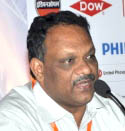
The Controller General of Patents, Designs & Trade Marks in India on March 12, 2012 has issued an order under Section 84 of the Indian Patent Act allowing Natco Pharma, a hydrabad based pharmaceutical company.to manufacture and sell a copycat version of Bayer's Nexaver ,In the first-ever case of compulsory licensing approval. Natco has been producing and selling this medicine for quiet some time now and has been engaged in a legal battle with Bayer.
The order was issued by India Patents Office as a 'Compulsory Licence' under the Indian Patent Act, which is in compliance with the TRIPS agreement of the World Trade Organisation and would effectively strip the German pharmaceutical company of its exclusive rights to the cancer drug.There is an estimated 1 lakh patients in India who needs to be administered with the medicine and the majority of them could not afford the cost.
Bayer ,the German pharmaceuticals and chemicals giant , maker of Aspirin which developed sorafenib/Nexavar with US biotechnology firm Onyx Pharmaceuticals has the monopoly for the drug used for renal and liver cancer.The Bayer sells it at Rs 2.84 lakh for a pack of 120 tablets while the Nateco pharma would offer the generic version at Rs 8,880 on a 120-capsule pack for a month's therapy. The life extender medicine could now be made available to patients at a price not exceeding Rs 8,880 for 120 tablets,over 30 times lower than that charged by its patent-holder.Thus it is a land mark verdict.
It is the second time ever, a country has issued a compulsory license for a cancer drug after Thailand , on affordability grounds. Thailand also issued Compulsory Licenses(CL) for HIV/AIDS and heart disease treatments.
"This could well be the first of many compulsory rulings here," said Gopakumar G Nair, head of patent law firm Gopakumar Nair Associates and former president of the Indian Drug Manufacturers' Association.
Under Section 84, a Compulsory Licence to manufacture a drug can be issued after three years of the grant of patent on the product, which is not available at an affordable price. Under the World Trade Organisation TRIPS Agreement, Compulsory Licences are lawful means to access affordable medicines by allowing others to manufacture and sell a patented product or process without the consent of the patent owner. This is the first time in the history of the Indian Patents Act, 1970, that the provision under Section 84 has been invoked.The provision of the Indian Patents Act allows for a Compulsory License to be awarded after three years of the grant of patent on drugs that are deemed to be too costly.
In July 2011, Natco the generic pharma company in India sought for a compulsory license in the Mumbai patent office to make Sorafenib Tosylate for which Bayer has a patent in the country since 2008 ,under the following three grounds of Section 84 of the Patent Act:
(a) that the reasonable requirements of the public with respect to the patented invention have not been satisfied, or
(b) that the patented invention is not available to the public at a reasonably affordable price, or
(c) that the patented invention is not worked in the territory of India.
All three grounds were upheld by the Controller general of patents in India.
"Global pharmaceutical manufacturers are likely to be worried as a result ... given that the wording in India's Patent Act that had been amended from 'reasonably priced' to 'reasonably affordable priced' has come into play now."adds Gopakumar G Nair.
The Controller general of patents ruled that the Bayer's Nexavar cancer drug costs around $5,500 a month in India, making it "not available to the public at a reasonably affordable price", where 40 percent of the citizens live below the poverty line.
The Controller general of patents, P H Kurian who is due to relinquish the office and return to Kerala service , based his decision on Bayer's admission that only 2% of kidney and liver cancer patients were able to access the drug, and its pricing (Rs 2.8 lakh for a month) did not constitute a "reasonably affordable" price.
WHO estimates that the patent companies are charging 20% to 100% on the manufacturing cost of life saving drugs.The companies put up the case by the logic that the R&D costs are to be met with in the short patent period.
Economist and intellectual property expert James Love said"The Bayer price of INR 3,411,898 per year (69 thousand USD) is more than 41 times the projected average per capita income for India in 2012, shattering any measure of affordability. Bayer tried to justify its high price by making claims of high R&D Costs, but refused to provide any details of its actual outlays on the research for sorafenib, a cancer drug that was partly subsidized by the US Orphan Drug tax credit, and jointly developed with Onyx Pharmaceuticals. Onyx told the SEC that the cost of R&D, pre-Orphan Drug tax credit, was $275 million through the 2005 FDA approval of sorafenib, including outlays on other compounds, indications that were not approved for marketing, and for expanded access trials in the United States that had limited value as scientific experiments. Bayer has made billions from sorafenib, and made little effort to sell the product in India, where its price is far beyond the means of all but a few persons"
The ruling sets certain restrictions also. NATCO cannot import the drug to satisfy the Indian market. It has to pay to Bayer a 6% royalty rate on net sales every quarter (maximum of the UNDP royalty recommendations). Natco has to make the drug itself and can't name it Nexavar, make it look the same or even state that it's the same as Nexavar although it can make its own version of the drug and sell it, and the license lasts the life of the patentie 2020.
"This (Bayer) case might become a trend-setter, wherein generic players can make copies of patented products," said Siddhant Khandekar, analyst at ICICI Direct.
"While global giants might not like this, generic companies will benefit along with common people," he said, adding that the cancer treatment market in India was worth up to 30 billion rupees.
No drugs have a unique world wide patent.The patent is distributed by the individual countries concerned.The majority of peoples in the African countries were denied access to the HIV drugs as the multinationals developing these drugs sold them at exorbitant rates.When Indian companies developed anti-HIV drugs and sold them at cheaper rates in these countries they had to face stiff resistances from these multinationals.But social health activists in the respective states stood by the Indian companies and thwarted their machinations.
Some years back when birds flue was ravaging the country, the central government has thought of making drugs available through compulsory licensing,but an order to the effect has only come up for the first time now.
Dr Tido von Schoen-Angerer, director of independent health care organization, MSF, said, "We have been following this case closely because newer drugs to treat HIV are patented in India, and as a result are priced out of reach. But this decision marks a precedent that offers hope. It shows that new drugs under patent can also be produced by generic makers at a fraction of the price, while royalties are paid to the patent holder. This compensates patent holders while at the same time ensuring that competition can bring down prices."
Generic manufacturer Cipla has already launched generic Nexavar (Sorafenib Tosylate) at around Rs 28,000 per 120-capsule pack, and is battling in a litigation with Bayer in the Delhi high court.The CIPLA faces infringement charges, and would have to seek a separate license
The order has set a precedent . A long-standing case for granting of an Indian patent for Swiss drug maker Novartis' cancer drug Glivec is to come up for hearing in the country's Supreme Court this month.
As in western countries if Universities,Drug manufactures ,R&D institutions should come together ,we can fail the brute dominance of the foreign multinationals in the drug sector.
*************Sri.Kurian is an IAS officer of 1986 batch of Indian Administrative Services (IAS). Before taking over as Controller General of Patents, Designs and Trademarks on 22nd January 2009, he was a Secretary to Government of Kerala, (Industries-Investment Promotion). He holds a Master Degree in Chemistry and did research for three years in the Institute of Science, Bangalore which is one of prestigious Institutes of India.


